Choosing the right tool in NILE can sometimes feel overwhelming. With a wide range of options available, it’s not always obvious which activity to use when thinking about student engagement.
To support academic tutors with this decision‑making, Richard Byles and Kelly Lea, Learning Technologists at the University of Northampton, co-delivered a series of workshops called Enhancing and Measuring Student Engagement through NILE Tools which ran between November 2025 and May 2026. As part of this, Richard created a table of digital engagement tools that helped staff compare and evaluate tools for engagement based on pedagogic purpose, rather than guesswork.
The NILE engagement activities table brought together commonly used engagement activities, like polls, journals, Padlet activities, quizzes and discussions, and set them out alongside considerations such as:
- what the activity is designed to achieve
- how it supports learning and engagement
- accessibility considerations for diverse learners
- potential risks around inappropriate use of AI
- time commitment for both students and staff
- how tutors might respond when engagement is low
So, rather than trying to work out what the ‘best’ tool was, tutors were able to make more informed decisions based on questions such as:
- What kind of engagement am I trying to encourage here?
- Is this activity inclusive and realistic for my students?
- How will I know whether it has been effective?
The resource is intended to be used flexibly, whether you are planning a new module, rethinking an existing activity, or simply exploring alternatives to familiar approaches within NILE.
By focusing on pedagogy, accessibility, and student experience, the activity table can support a more purposeful use of the wealth of NILE tool available to foster meaningful engagement, rather than engagement for its own sake.
Below is a link to the resource, which you are welcome to use and if you need help, you can contact your Learning Technologist to schedule any training you need.
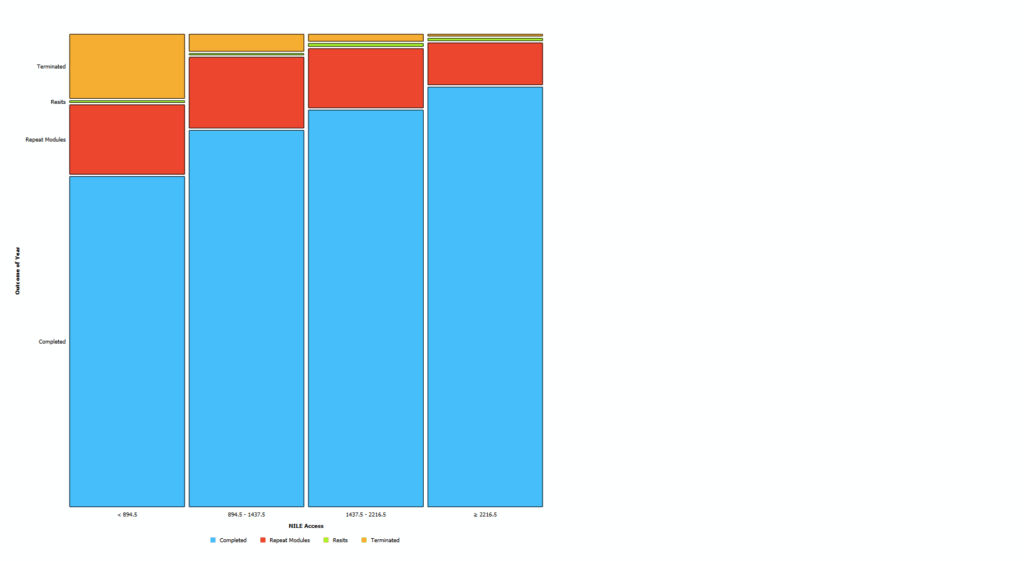
At the University of Northampton, we provide a range of means for students to engage with their academic programme. We know how valuable this material can be – from teaching and Virtual Learning Environment (known locally as NILE) sites to making library resources available, it is a key part of providing great educational opportunities. Sean Brawley (Student Engagement Manager) in Learntech has looked at a range of student data points to review the possible impact on outcome measures.
[Please note that further work is being undertaken to develop a more robust evaluation process]


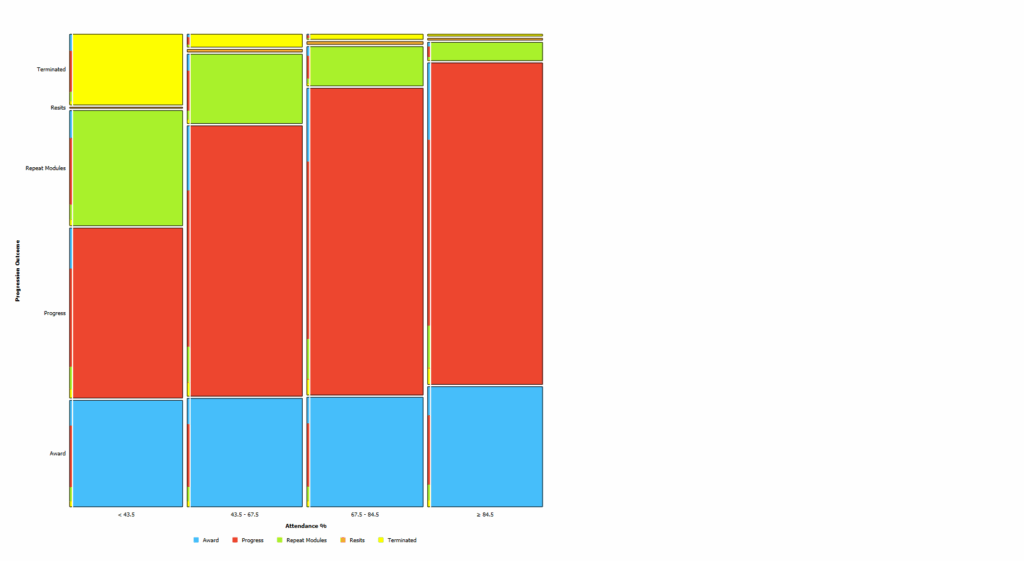
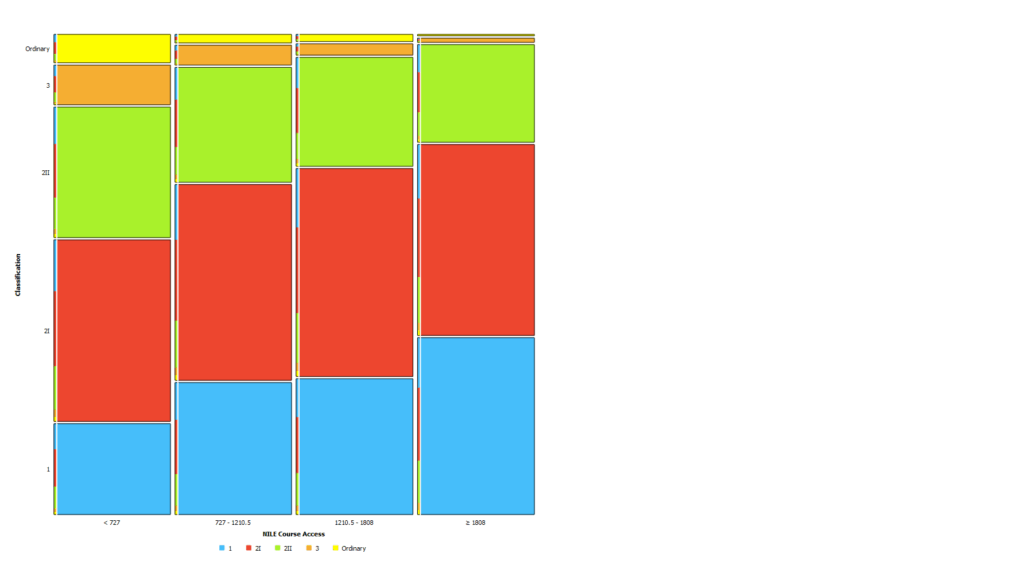
The above two diagrams indicate that students with higher attendance and higher usage of VLE / NILE resources in 2023/24 were more likely to complete the year and less likely to face either termination or module failure.
Where students take advantage of the teaching and electronic resources provided in their course it is likely that they are more likely to succeed in progressing to the next stage.
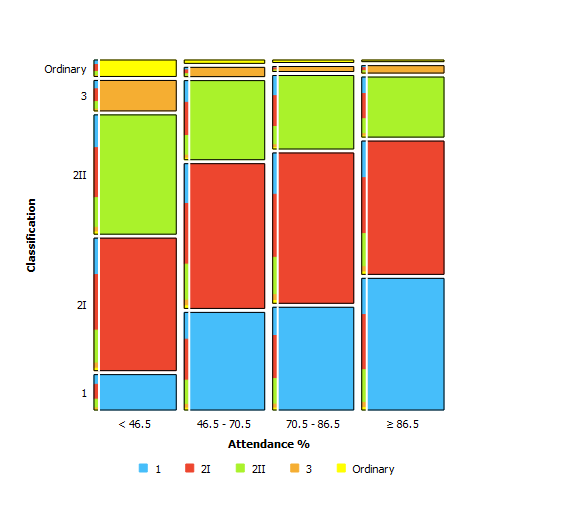
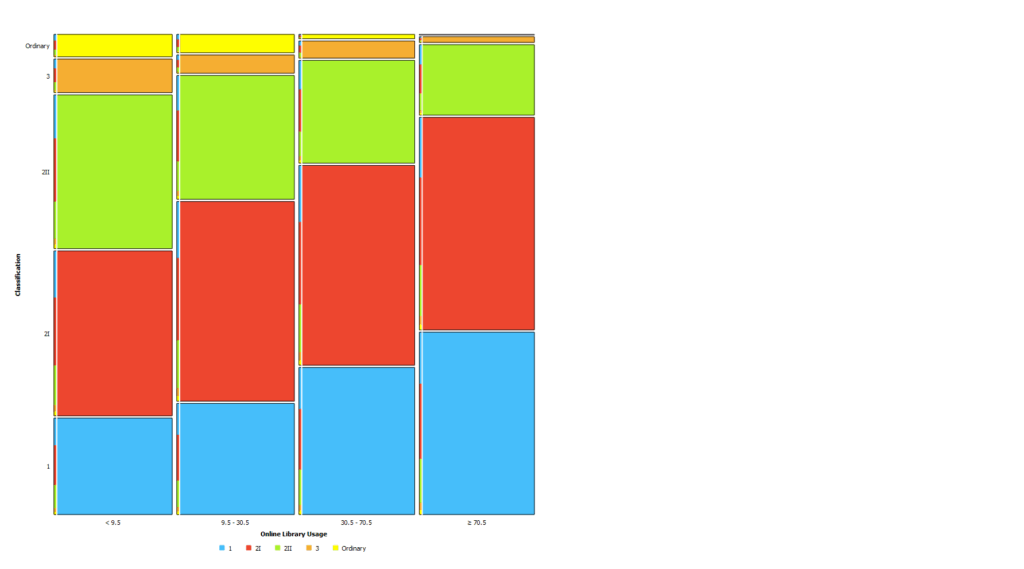
Its not just a question of progression though- the three charts below** show how students average classification positively correlates with attendance levels, VLE / NILE logins and E-Resource (Open Athens) usage. Staying engaged with the University would seem to be a real driver of students understanding and achievement.


These charts help tell a story- one where students who engage with our teaching and learning materials are likely to be better prepared to succeed in their studies. That’s part of why starting in 2025 the University of Northampton will have a new Engagement Policy- and by supporting and encouraging students to stay engaged with their programme, we are helping them to succeed in their education too.
Of course, student achievement is a complex and multivariate outcome. Each student is an individual, and we can also see from the above data that some students succeed with lower measurable engagement levels, and vice versa- and it’s also the case that there are lots of ways to engage we can’t easily measure!
However, we do know from research across the sector that engagement with teaching, course materials and other key factors strongly correlates with and is a strong input into good outcomes for students. Not only does the current findings indicate the value of increasing these, but it also further demonstrates the possible direct value to students of the work of staff across the institution.
*Based on 7253 23/24 student outcomes
**Based on 1609 23/24 student classifications
Recent Posts
- Blackboard Upgrade – May 2026
- Choosing the Right NILE Tool to Encourage Student Engagement
- Worthy Online Work event review
- Blackboard Upgrade – April 2026
- 15 Years of the Learning Technology Blog!
- Blackboard Upgrade – March 2026
- Blackboard Upgrade – February 2026
- Blackboard Upgrade – January 2026
- Spotlight on Excellence: Bringing AI Conversations into Management Learning
- Blackboard Upgrade – December 2025
Tags
ABL Practitioner Stories Academic Skills Accessibility Active Blended Learning (ABL) ADE AI Artificial Intelligence Assessment Design Assessment Tools Blackboard Blackboard Learn Blackboard Upgrade Blended Learning Blogs CAIeRO Collaborate Collaboration Distance Learning Feedback FHES Flipped Learning iNorthampton iPad Kaltura Learner Experience MALT Mobile Newsletter NILE NILE Ultra Outside the box Panopto Presentations Quality Reflection SHED Submitting and Grading Electronically (SaGE) Turnitin Ultra Ultra Upgrade Update Updates Video Waterside XerteArchives
Site Admin